Cat Grooming Guide: Tips for a Healthy, Happy Cat
18 September 2026
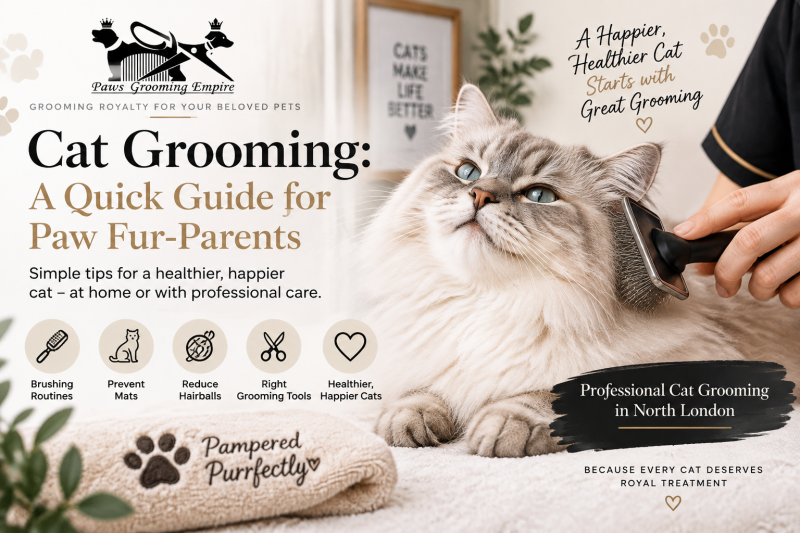
Learn essential cat grooming tips to keep your cat’s coat healthy, prevent mats and reduce shedding with professional grooming advice from Paws Grooming Empire.
Cats are naturally clean animals. They spend a significant amount of time grooming themselves every day, using their rough tongue to remove loose fur, dirt and debris while keeping their coat neat. However, even the most independent cats need a little help from their humans to maintain a healthy coat, prevent discomfort and spot potential problems early.
Regular grooming is not just about making your cat look beautiful. It plays an important role in:
● Maintaining healthy skin and fur
● Reducing shedding around your home
● Preventing painful mats and tangles
● Reducing hairballs
● Supporting your cat’s overall comfort and wellbeing
At Paws Grooming Empire, we understand that every cat is different. Some cats enjoy being brushed, while others need a calmer and more patient approach. Our professional cat grooming services in North London are designed around your cat’s coat type, personality and individual needs.
Why Is Cat Grooming Important?
Many owners assume cats do not need grooming because they clean themselves. While cats are excellent self-groomers, they cannot always manage everything alone.
Professional and regular home grooming helps:
Keep The Coat Healthy
Brushing removes:
● Loose fur
● Dead hair
● Dirt
● Excess oils
It also helps distribute natural oils through the coat, keeping your cat’s fur soft and healthy.
Prevent Painful Mats and Knots
Matted fur is one of the most common grooming problems in cats.
Mats occur when loose hair becomes tangled and compacted. Over time, these knots can pull on the skin and become uncomfortable or painful.
Common areas where mats develop include:
● Behind the ears
● Under the legs
● Around the neck
● Under the belly
● Near the tail
Long-haired cats are especially prone to matting and often require more frequent grooming.
Reduce Hairballs
Cats naturally swallow some loose fur while grooming themselves.
Too much swallowed hair can contribute to hairballs.
Regular brushing helps by removing loose fur before your cat has the chance to ingest it.
This is particularly helpful for:
● Long-haired cats
● Indoor cats
● Cats that shed heavily
How Often Should You Groom Your Cat?
The ideal grooming routine depends on:
● Coat length
● Breed
● Age
● Lifestyle
● Health condition
There is no single schedule that works for every cat.
Short-Haired Cats
Short-haired cats generally need less maintenance but still benefit from regular brushing.
Recommended routine:
Brush once a week
This helps:
✓ Remove loose fur
✓ Reduce shedding
✓ Check skin condition
✓ Prevent excessive hairballs
During seasonal shedding periods, such as spring and autumn, your cat may benefit from additional brushing.
Long-Haired Cats
Long-haired cats require more frequent grooming because their coats can easily become tangled.
Examples include:
● Persian cats
● Maine Coons
● Ragdolls
Recommended routine:
Brush several times per week, often daily for cats prone to matting
Regular grooming helps prevent:
● Knots
● Mats
● Excessive shedding
● Coat discomfort
Indoor Cats vs Outdoor Cats: Do They Need Different Grooming?
Many owners believe indoor cats require less grooming. While indoor cats may encounter fewer outdoor elements, they can still experience:
● Shedding
● Hairballs
● Coat build-up
● Matting
Indoor cats may also shed differently because they live in a controlled environment with consistent temperature and lighting.
Outdoor cats may need additional checks because they can encounter:
● Dirt
● Seeds
● Parasites
● Sticky substances
Regular grooming gives you the opportunity to check your cat’s coat and skin.
The Best Cat Grooming Routine at Home
A simple grooming routine can make a big difference.
Step 1: Choose The Right Time
Pick a moment when your cat is relaxed.
Good times include:
● After eating
● After playtime
● When your cat is sleepy
Avoid grooming when your cat is already stressed or energetic.
Step 2: Start With Gentle Brushing
Begin slowly and allow your cat to become comfortable.
Focus on areas that commonly collect loose fur:
● Back
● Sides
● Chest
● Tail area
Avoid pulling at knots because this can make grooming uncomfortable.
Step 3: Check Your Cat’s Skin
While brushing, look for:
● Redness
● Dry patches
● Lumps
● Fleas
● Scabs
● Unusual irritation
Regular grooming allows you to notice changes early.
Step 4: Keep Grooming Sessions Short
Cats usually respond better to short, positive sessions.
A few minutes regularly is often better than one long stressful grooming session.
Essential Cat Grooming Tools
Having the correct tools makes grooming easier.
Soft Brush
Useful for:
● Removing loose hair
● Maintaining short coats
Slicker Brush
Helpful for:
● Longer coats
● Removing loose undercoat
● Preventing tangles
Metal Comb
Ideal for checking:
● Knots
● Hidden mats
● Areas behind ears and legs
Nail Clippers
Cat nails should also be monitored regularly.
Long nails can:
● Get caught in fabrics
● Become uncomfortable
● Affect walking
If your cat dislikes nail trimming, professional grooming can help.
How To Prevent Matted Cat Fur
Prevention is always easier than dealing with severe mats.
Follow these tips:
Brush Regularly
Consistent brushing prevents loose fur from becoming tangled.
Pay Attention To Problem Areas
Check:
● Behind ears
● Armpits
● Belly
● Tail base
These areas experience more friction.
Do Not Cut Mats With Scissors
Trying to cut mats yourself can accidentally injure your cat because tightly tangled fur sits close to the skin.
For severe matting, professional grooming is the safest option.
Does My Cat Need Professional Grooming?
Some cats benefit greatly from professional grooming, especially when home maintenance becomes difficult.
Consider booking a professional groom if your cat:
● Has frequent mats
● Has a thick or long coat
● Sheds heavily
● Struggles with self-grooming
● Is older or less flexible
● Becomes stressed during home grooming
Professional groomers have the experience and equipment to safely manage difficult coats while keeping your cat comfortable.
What Happens During A Professional Cat Grooming Session?
At Paws Grooming Empire, grooming is about more than just appearance.
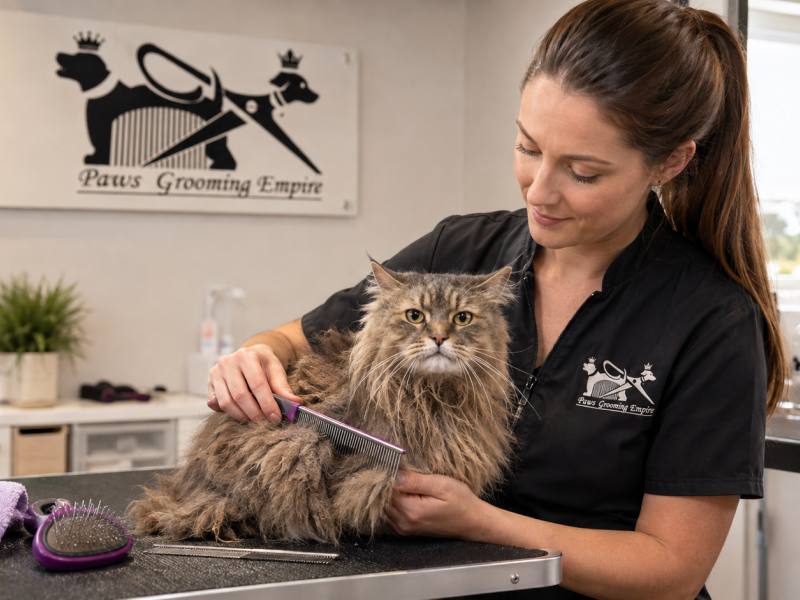
A professional grooming session may include:
✓ Coat assessment
✓ Gentle brushing and de-shedding
✓ Mat removal where appropriate
✓ Nail care
✓ Coat maintenance advice
✓ Individual care based on your cat’s temperament
Every cat has a different personality, so patience and understanding are essential.
Signs Your Cat May Need Grooming Support
Look out for:
● Fur becoming clumpy
● Increased shedding
● More hairballs
● Greasy coat
● Bad smell
● Your cat struggling to groom itself
● Visible knots or mats
These are signs your cat may need additional help.
Cat Grooming FAQs
How often should I brush my cat?
Short-haired cats usually benefit from weekly brushing, while long-haired cats may need brushing several times a week or daily depending on their coat condition.
Do cats need professional grooming?
Not every cat requires frequent professional grooming, but many benefit from it, especially long-haired cats, senior cats and cats prone to matting.
Can grooming reduce cat hair around the house?
Yes. Regular brushing removes loose fur before it falls around your home.
How do I stop my cat getting mats?
Regular brushing, using suitable grooming tools and checking problem areas can help prevent mats.
Should I bathe my cat regularly?
Most healthy cats do not require frequent baths because they naturally keep themselves clean. Baths are usually only needed in specific situations, such as heavy soiling or veterinary recommendations.
Give Your Cat The Care They Deserve With Paws Grooming Empire
A healthy coat starts with consistent care.
Whether your cat needs regular maintenance, help with shedding, nail care or a professional grooming session, Paws Grooming Empire provides gentle, personalised cat grooming services in North London.
Our experienced team understands that every cat is unique. We take the time to make grooming a calm and positive experience.
Book your cat grooming appointment with Paws Grooming Empire today and help your feline friend look, feel and stay their best.