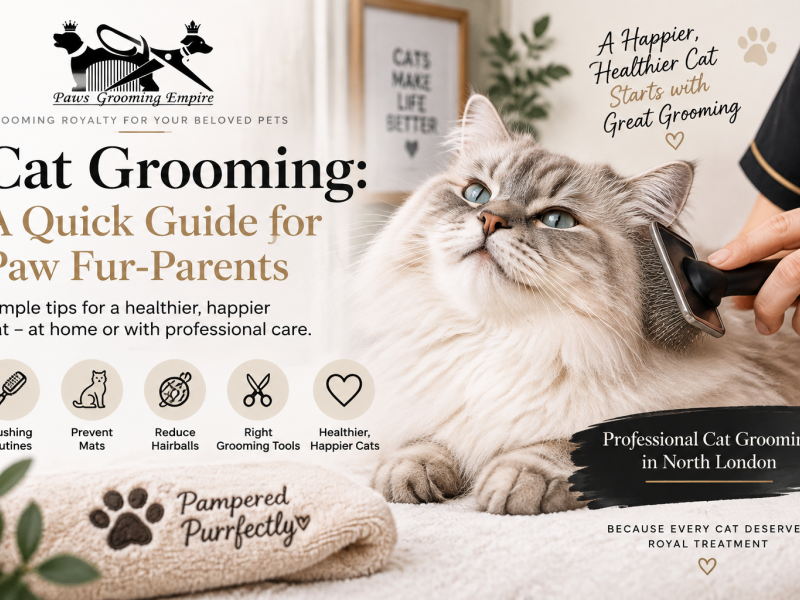
Cat Grooming : A Quick Guide for Paw Fur-Parents | Paws Grooming Empire Ltd
20 February 2026

Discover essential cat grooming tips for indoor cats. Learn how often to brush short-haired vs long-haired cats, prevent mats & hairballs, and build a routine. Expert advice from Paws Grooming Empire Ltd.
Indoor cats need grooming roughly once a week for short hair and twice or three times a week for longer hair. Regular brushing reduces loose fur, aids hairball prevention, and keeps skin fresh. Nail trims every two to four weeks keep snags and scratches at bay. Bathing remains unusual too, only if the coat becomes soiled or greasy. This guide separates tasks by coat type, age and season.
Understanding Feline Grooming
Grooming is a natural, daily habit that keeps a cat’s coat clean, skin healthy and body comfy. It helps you notice any trouble early and have calm, steady time with your cat. Needs vary by breed, age, fur and habits, so no one schedule fits all.
A Cat's Instinct
In fact, cats spend 30 to 50 per cent of each day grooming, a serious proportion of time for a small creature. The tongue’s tiny barbs lift free hair and dirt, distribute oils, and leave the coat flat. You’ll notice this after a meal, nap or play, a tidy reset that prevents the skin from feeling clogged.
When do kittens learn to groom? That early start demonstrates just how deep the behaviour runs. In multi-cat households, allogrooming creates a common odour, smoothes over minor social rifts and makes a claim of trust. Perhaps you will see one cat licking another’s head or neck – difficult places to get at.
Grooming is important for controlling heat and distributing oil. In warm rooms, saliva on fur helps cool and even smeared oil adds a light sheen and prevents the skin from drying out. During cooler indoor-heated months, skin can dry up, so consistent drinking and a well-rounded diet count for coat health.
A cat that grooms itself, travels easily and has a shiny coat is probably doing okay. Dips in self-grooming are not uncommon signs of pain, stress or illness. Any changes warrant investigation.
Why We Intervene
- Matted or tangled fur pulls at the skin and traps dirt.
- Spring and autumn shedding is a challenge. Loose hair becomes hairballs.
- Breed risk: Persians, Maine Coons, and Ragdolls are prone to mats under their legs, around the neck, and behind the ears.
- Senior, overweight or longhaired cats who cannot reach the back, flanks or base of their tail.
- Oily fur, little tangles, pee on feet, or bad smell are alarm bells.
- Looks for fleas or mites, wounds, or unusual lumps when brushing.
- To keep the skin comfortable in dry, hot homes and to help the coat's sheen.
Short-haired cats can get away with weekly brushing, although they moult more in spring and autumn and appreciate additional sessions then. Long-haired cats need brushing on a daily basis to remove tight mats that form at friction points. A soft slicker or metal comb in short strokes lifts dead hair before it packs down.
Make the most of it to check for fleas, scabs, sore spots or musty-smelling ears or skin. Short calm sessions will trump long, stressful ones. Gradually, this rhythm becomes mutual grooming, builds trust and reduces hairballs.
How Often to Groom Your Indoor Cat
Have a grooming plan based on their length of coat, age and health. Brush more during heavy shedding, monitor behaviour and coat for changes, and keep checks regular for comfort and early warning signs.
1. Short-Haired Cats
How often should I groom my indoor cat? Brush weekly to remove loose hair and distribute oils. Brush twice if your cat sheds heavily or rolls on rugs. Although short-haired cats groom themselves, a little assistance from owners helps. The average cat only requires brushing once a week.
Use a soft bristle brush or grooming glove – both are quick and gentle. Keep sessions under five minutes, finish with a treat and quit while you’re ahead. As you brush, check for dandruff, fleas or reddened patches. Observe any new scabs or a lacklustre coat, as these can indicate diet or stress.
In spring and autumn, increase to two or three short brushes a week. Cats moult according to daylight hours, so sunnier days lead to more hair on your sofa!
2. Long-Haired Cats
How Often to Brush Your Indoor Cat
Daily brushing is ideal to avoid mats and tangles that tug at the skin. Most long-haired cats appreciate being groomed daily to prevent painful knots. Daily coat combing is advisable for indoor cats with access to bright and warm rooms.
A slicker brush for surface fluff and a wide-toothed comb for the undercoat. Work from neck to tail, then inspect ‘armpits’, tummy and behind the ears where knots lurk and tighten fast. If your cat mats frequently, do a second short pass in the evening.
Indoor cats will require grooming every four to eight weeks if the coat mats despite your efforts. Plucking instead of shaving. In peak shed, increase the frequency or time for short “groomathon” sessions to stay ahead.
3. Senior Cats
Older cats may require more assistance as stiff joints restrict self-grooming. How to groom your indoor cat
Check weekly for bald areas, sores, greasy fur or sudden fur loss, which can indicate an injury or illness. Trim claws more regularly because less scratching means overgrown claws that catch on bedding.
4. Kittens
Administer some nice gentle grooming when they’re early on to instil calm habits. Use a small soft brush and keep it playful with praise and treats.
Start with a few strokes of the back and build up to including the legs and tail over several days. Bring in nail trims and a finger brush for teeth as your kitten remains calm.
5. Seasonal Needs
Brush more in spring and autumn when coats transition more quickly. Be alert for matting and additional shedding in bright light and warm rooms if your home has them.
Swap tools as coats thicken or thin: slicker for bulk, comb for undercoat. Inspect more frequently for fleas and skin flare-ups during warmer months. Some cats respond well to a monthly bath. Bathing indoor cats once a month with baking soda can help keep them pH balanced. Follow vet-safe guidelines and rinse thoroughly.
Essential Grooming Toolkit
A basic, tidy toolkit makes frequent grooming more straightforward, safer and relaxing. It makes each session a mini health check, meaning you catch any skin problems, lumps, injuries or parasites early, as you create a bond and build trust while lowering stress levels for you both.
- Core tools: slicker or pin brush, wide-toothed comb, flea comb, undercoat rake, cat nail clippers or scissors, soft cat toothbrush, feline toothpaste, microfibre cloths, styptic powder, and a small torch for checks. Throw in some pet wipes and a mat to stop the car getting mucky.
- Pick by coat type: Short coat cats often do well with a soft slicker and fine comb. Long coat breeds require a wide-toothed comb and an undercoat rake to prevent tangles and matting. Thick double coats will benefit from an undercoat rake and a pin brush.
- Care and hygiene: Wash brushes and combs weekly in warm soapy water, rinse well, and air-dry. Wipe nail tools with alcohol. Replace dull clippers and bent pins to avoid snags.
- Storage and access: Keep tools in a small caddy near your cat’s favourite perch. Name things. Store treats with the kit to help with calm, short sessions.
- Habit building: Start young where you can, introduce one tool at a time, and keep early sessions under two minutes. This makes grooming feel safe, even pleasant.
Brushes and Combs
|
Tool |
Best for |
How it helps |
Coat types |
|
Slicker brush |
Daily tidy |
Lifts loose hair, reduces shedding |
Short–long |
|
Pin brush |
Finish and fluff |
Smooths topcoat, gentle polish |
Medium–long |
|
Wide-toothed comb |
Knots |
Works through tangles without pull |
Long, curly |
|
Undercoat rake |
Thick undercoat |
Thins dense fur, stops mats |
Double coats |
|
Flea comb |
Parasites check |
Finds fleas, eggs, flea dirt |
All |
It’s best to start with a wide-toothed comb for knots, then an undercoat rake on thick or double coats. Work in short strokes and check the skin as you go.
Run a flea comb along the neck, base of tail and armpits. Wipe on a wet white tissue to look for flea dirt. Rotate tools: detangle, de-shed, then smooth. Handy for long-haired cats, repeat a few times a week to prevent mats and skin pain from forming.
Nail Clippers
Use cat-specific clippers or scissors for clean cuts. Human nail clippers can crush the claw.
Trim every 10 days to two weeks if claws grow fast. Otherwise, every 2-4 weeks is good for many indoor cats. Press the pad to extend the claw, dodge the pink quick, and clip little bits.
When trimming, inspect pads for grit, cuts, swelling or redness. Stop minor bleeding with styptic powder.
Finish with praise and a little reward. Short, gentle sessions create a reliable habit and save scratches and snags at home.
Dental Care
Brush feline gnashers with a soft cat toothbrush three to four times a week, or daily if your cat tolerates it. Only use cat toothpaste, as human pastes could damage cats.
Check for red gums, drooling or bad breath, which can signal dental disease. Lift the lip, work the brush in tiny circles and concentrate on the outer surfaces.
Include cat-approved dental treats, gels or chew toys to tackle plaque on non-brushing days. Daily oral hygiene complements coat care because a thorough grooming regime usually mellows a feline, making mouth inspections easier.
Beyond the Brush
Indoor cats do better when grooming goes beyond a quick brush. Regular sessions keep skin, coat and claws in tiptop condition and give you a zen moment to pick up any niggles early on. How often you groom depends on coat length, density and your cat, but most will do well with a weekly check-in, while long-haired cats require daily combing and regular trims to prevent knots. Add nail trims every 10 to 14 days, cleaning eyes and ears as needed, and a monthly bath with a cat-safe, pH-balanced shampoo if your vet says it works for your cat or a health issue.
Preventing Matts
- Set a steady plan: short-haired cats weekly, medium cats twice weekly, long-haired cats require daily combing and regular haircuts.
- Work in small zones: chest, behind ears, armpits, belly, tail base.
- Use tools that glide: a wide-toothed comb, a soft slicker and a mat splitter for early snags.
- Detangle by hand first, then comb. Hold the fur close to the skin rather than pulling.
- Maintain clean coats. In moisturising mist, if your vet recommends, it decreases friction.
- Steer clear of coarse towels and snug-fitting jumpers that will rub and pack the coat.
- Stop when the cat stiffens. Try brief, relaxed sessions and reward breaks.
- ‘…Never, never cut close to skin with scissors…’ Extreme matting requires a groomer or vet.
Gently detangle baby knots with fingers or a wide-toothed comb before they hook and tangle into the skin.
If a matt’s firm, don’t punish it. Schedule a groomer, particularly for elder cats or those with thick undercoats.
Managing Hairballs
- Brush frequently to remove loose hair. Beef up when it’s raining sheds.
- Provide fibre-rich food or a hairball-control diet to move hair along.
- Add hydration: fresh water bowls, cat fountains or wet food boosts moisture intake.
- Utilise vet-approved hairball gels or omega oils if necessary.
- Play up movement aids gut motility and reduces stress grooming.
- Litter check: watch stool shape and ease of pass.
Feed a stable, fibre-rich diet. Brands branded for hairball care can be helpful too, as they evolve gradually over 7 to 10 days.
Look out for excessive vomiting, hacking without a hairball, poor appetite or constipation. See a vet if symptoms continue or your cat is straining.
Checking Skin
Run fingers along the coat to find redness, sores, dandruff, bald patches or greasy patches. Winter air can dry skin, so keep rooms humid and grooming gentle.
Look for flea dirt, ticks or mites by parting the fur, particularly at the neck and tail base. Use year-round parasite control if locally recommended.
Watch out for any odd lumps, scabs or wounds. Eye gunk, cloudiness or redness may indicate disorders or conjunctivitis.
Skin should feel soft, not dry or greasy. Allergy or health issue-prone cats may need more frequent targeted care.
Reading Your Cat's Signals
How often you groom will depend on what your cat is saying to you at the time. Read mood, comfort, and health cues. Then set a schedule that fits their coat: daily for long or medium coats and weekly for most short coats.
Behavioural Cues
Purring, slow blinking and a soft body are green lights. Most cats enjoy a stroke around the face and top of the head, so begin there with light brush strokes. Use the back of the brush first to introduce them, and flip it over once they are comfortable with the sensation. Brushing in one direction feels calmer and less intrusive.
A flicking tail, pinned ears, or a low growl say pause. If your cat tenses, attempts to leave or tucks the tail, ease off, shorten the session or swap tools. A rubber grooming mitt can be gentler on sensitive cats than metal pins. For mats, do not pull, but de-shed and work on them later with a detangling spray and a comb or a groomer.
Head nudges and gentle paw taps are helpful signals. A nudge might simply signify “more chin, please” and a tap signifies “break now.” Respect these signals to foster confidence. Keep early sessions under five minutes and finish positively with praise.
Match speed and routine to mood. On quiet days you can throw in a few extra sweeps over that flank. On scratchy days, stick to soft areas of the body and avoid the tummy. A regular beat, a silent room, and a grippy mat all assist.
Physical Signs
Coat changes say a lot. Both short and long-haired cats should have an even, shiny coat and a similar feel from shoulder to tail. If fur becomes dull, thin or matted, inspect diet, hydration and brushing technique. Cats that cease to groom themselves may be stiff or in pain.
Excess licking, scratching or biting can point at skin issues or fleas. Look out for red patches, dandruff or little scabs. Transition to gentler implements and fewer strokes per area while you consult.
Keep an eye out for bald patches or greasy, matted fur. Mats quickly form in armpits, behind ears and under the tail, particularly in long-haired breeds that require daily grooming. Don’t cut mats with scissors. Use a mat splitter or go to a professional.
Scan nails, ears and teeth with every session. Trim tips before they curl, wipe ears if grubby and watch out for any mouth odour and drool. Increased hairballs can be a warning sign too. If throwing up becomes more frequent, contact your vet. To lessen travel-induced anxiety, get the carrier out at home beforehand so that it is familiar, since most cats do not respond well to abrupt routine changes and coerced journeys.
When to Call a Professional
Grooming professionals are a vital pillar of your at-home cat-care routine, helping to keep your indoor cat safe, clean and zen. It counts when coat care gets tricky or when health and behaviour intervene.
Situations that call for expert hands
- Call a groomer or vet if your cat is painful, flinches at touch, has hot, red skin, bald patches, or an intense, rancid smell that persists after washing. These can be signs of skin disease, injuries or other infections that require expert attention.
- Book regular slots if your cat has a high-care coat. Long-haired breeds and cats with thick undercoats usually require a groom every three to six weeks to prevent mats, felting, and knots. Think Persian, Ragdoll or other long-haired mix. Short-haired cats with oily skin or heavy shed will benefit from a seasonal deep groom.
- Use pros for jobs that need steady hands: nail trims, sanitary shaves, and full de-shed sessions. A quick nail trim every two to four weeks prevents split claws and sore toes. A smart sanitary shave keeps older cats, overweight cats, or cats with arthritis clean when they cannot reach.
- When to call for help Arthritis, dental pain, obesity, or recuperation after surgery can all slow a cat’s natural wash. A groomer can help keep the coat clear while you and your vet treat the root of the problem.
- Seek professional help if behaviour gets in the way. Anxiety, neophobia, or smacks in the face whilst brushing could cause stress and bites. Qualified groomers employ handling techniques, chilled environments and where necessary, vet-led sedation plans to keep the cat safe.
- Call in the professionals if you have fleas, lice and ringworm. Parasites and fungal problems spread quickly and threaten humans. A groomer can clip mats, bathe with vet-advised products and assist with home clean-up. This should always be in conjunction with veterinary treatment.
- Look out for sudden changes in habits. Sudden over-licking, nibbling fur, or persistent scratching can signal pain, anxiety, or allergy. How to know when to get help from the groomer.
- If you’re unsure how to brush, bathe or clip, ask. One tutorial could transform your entire routine, from the right comb for a double coat to how to properly hold a paw while giving tidies.
|
Situation |
Why a pro helps |
Pros |
Cons |
|
Severe mats or pelts |
Safe removal without skin cuts |
Quick relief, less pain |
Cost, may need sedation |
|
Long‑hair maintenance |
Prevents tangles and felting |
Coat health, less shed at home |
Regular expense |
|
Nail trims |
Avoids injury and split claws |
Fast, precise |
Travel stress |
|
Sanitary shave |
Keeps rear clean, odour down |
Hygiene, comfort |
Regrowth upkeep |
|
Skin issues/odours |
Early find of disease |
Tailored care, vet referral |
Extra clinic visits |
|
Parasites/ringworm |
Controls spread |
Clean‑up plan, coat care |
Isolation, treatment time |
|
Behaviour hurdles |
Low‑stress handling |
Safety for all |
May need desensitisation |
To keep an indoor cat in tip-top shape, establish a routine. Short hair cats are fine with a quick brush a couple of times a week. Long hair buddies require a daily sweep. Nail trims should be done every two to four weeks. Ears and teeth should be checked once a week. A bath is necessary only if messy or if advised by the vet. Brush your indoor cat regularly to avoid hairballs. Fun fact: Cats groom each other to strengthen bonds, keep clean, and avoid conflict.
A friend’s elderly cat used to resent long sessions. A ten-minute brush after supper did the trick. There was less shedding, fewer mats, and no fuss. Little and often is key.
For a beginning, choose one implement and one practice this week. Record what your cat enjoys. Start from there. Want extra help or a kit list? Drop us a message or book a short chat.
Frequently Asked Questions
How often should I brush my indoor cat?
Short-haired cats: brush 1 to 2 times per week. Long-haired cats: brush daily or at least 3 to 4 times per week. Brushing regularly reduces shedding, hairballs and mats. Change this frequency if you notice more loose hair or tangles.
Do indoor cats still need baths?
Usually not. How often should I groom my indoor cat? Bathe only if they are very dirty or sticky or if they have a skin problem. Use a cat-friendly shampoo. If bathing causes your cat distress, find a professional.
How often should I trim my cat’s nails?
Every 2 to 4 weeks. Indoor cats are prone to developing sharp tips that snag on fabric. Trim little and often and steer clear of the quick. If in doubt, get a vet nurse or groomer to show you.
What tools do I need for grooming?
Via a slicker brush or combo, de-shedding tool, nail clippers if necessary, and cat-safe wipes. For long coats, include a wide-tooth comb for detangling. Keep styptic powder handy for nail nips.
How can I tell if my cat needs more grooming?
Look out for mats, dandruff, greasy fur, a strong smell or more hairballs. Look out for reduced self-grooming, which could indicate pain or illness. Brush more and see the vet if it doesn’t resolve.
When should I see a professional groomer or vet?
Seek help for extreme matting, impacted undercoat, dermatological issues, fleas, or if your cat becomes aggressive or very stressed during grooming. Senior, overweight, or arthritic cats may require professional grooming.
How do I make grooming less stressful?
Keep sessions brief and calm. Begin with gentle strokes. Use treats as a reward. Groom when your cat is calm. Prematurely stop before annoyance builds. Use calm tools and a steady platform.