Does My Cat Need Grooming? A Guide to Professional Cat Grooming in North London
27 August 2026
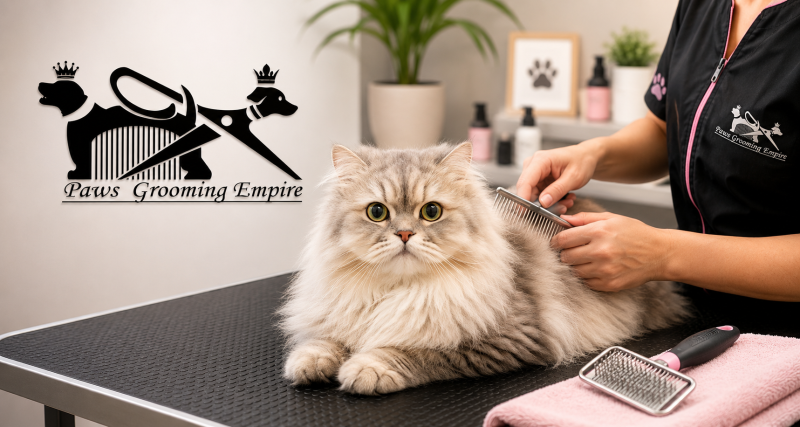
Does your cat need professional cat grooming? Learn how often cats should be groomed, when matting needs attention and how Paws Grooming Empire can help.
Cats are well known for keeping themselves clean, so it is understandable that many owners wonder: does my cat actually need grooming?
The answer is often yes.
Although cats naturally spend a considerable amount of time grooming themselves, not every cat can keep its coat in good condition without some help. Long-haired cats, older cats, cats with mobility problems and cats that are particularly prone to knots and matting may all benefit from additional grooming.
Sometimes the first sign of a problem is a small knot hidden beneath the coat. Left untreated, it can develop into uncomfortable matted fur that becomes much harder to remove.
At Paws Grooming Empire, we provide professional cat grooming in North London, helping owners maintain their cat's coat while keeping the grooming experience as calm and comfortable as possible.
Does My Cat Need Grooming?
Even if your cat appears to be very good at looking after their own coat, regular grooming can still play an important role in their overall care.
Cats Protection advises that some cats need additional grooming support, particularly cats with long fur, matted coats, reduced mobility or difficulty grooming themselves.
Your cat may need extra grooming if you notice:
● Knots or tangles developing in the coat
● Areas of matted fur
● Excessive loose hair or shedding
● Fur that appears greasy, untidy or clumped together
● Your cat struggling to reach parts of their body
● Dirt or debris becoming caught in the coat
● Your cat becoming uncomfortable when certain areas are touched
● Long fur becoming tangled around the legs, chest, tummy or hindquarters
Long-haired cats in particular can develop knots surprisingly quickly.
The RSPCA recommends regular grooming because it helps remove loose hair and can reduce serious tangling and matting. Grooming also gives owners an opportunity to notice changes in their cat's skin or coat.
"But My Cat Grooms Themselves. Isn't That Enough?"
For some healthy, short-haired cats, natural grooming combined with occasional brushing at home may be sufficient.
For others, it isn't.
Age can make grooming more difficult
As cats become older, they may become less flexible. Reaching the back, hindquarters and other areas can become increasingly difficult.
You might begin noticing:
● Untidy fur around the back
● Clumps developing near the hind legs
● More loose or dead coat
● Areas your cat no longer appears to groom
This does not necessarily mean your cat has stopped caring for themselves. They may simply find grooming physically more difficult.
Long-haired cats need more coat maintenance
Persians, Maine Coons and other long-haired cats can require considerably more grooming than short-haired breeds.
Cats Protection advises that while a short-haired cat may only need brushing around once a week, long-haired cats can require daily grooming, particularly where tangles and matting are a risk.
Missing even a relatively short period of coat maintenance can sometimes allow knots to develop.
How Often Should I Get My Cat Professionally Groomed?
There is no single grooming schedule that is right for every cat.
How often your cat needs a professional cat groomer will depend on factors including:
● Coat length
● Coat thickness
● Breed
● Age
● Lifestyle
● Shedding
● How easily the coat becomes tangled
● Your cat's ability to groom themselves
● How much grooming you can comfortably manage at home
Short-haired cats
Many short-haired cats maintain their coats successfully themselves with additional brushing from their owners.
However, professional grooming can still be useful if your cat is shedding heavily, struggling with grooming, developing knots or simply needs additional coat maintenance.
Long-haired cats
Long-haired cats generally require much more frequent attention.
Daily home grooming can help prevent knots from developing, but some owners find it difficult to maintain areas such as:
● Behind the ears
● Under the front legs
● Around the chest
● Around the tummy
● Behind the back legs
● Around the tail and hindquarters
These are common places for tangles to develop.
Professional grooming can complement your home routine and help prevent minor tangles from becoming serious matting.
Older or less mobile cats
An older cat may previously have maintained their coat perfectly but gradually become less able to do so.
Professional grooming can provide additional support where needed.
At Paws Grooming Empire, we can assess your cat's individual coat and help you understand what level of ongoing grooming may be appropriate rather than applying the same schedule to every cat.
Can a Groomer Remove Matted Fur From My Cat?
Yes, professional cat groomers can often help remove matted fur.
However, the appropriate method will depend on how severe the matting is and how close it is to your cat's skin.
A mat is more than simply untidy fur.
Hair becomes tangled together and gradually forms a tight clump. As the mat becomes tighter, it may pull against the skin underneath, which can make the area increasingly uncomfortable.
This is why matting is best dealt with early.
Why You Shouldn't Cut Cat Mats Out With Scissors
One of the biggest mistakes an owner can make is attempting to cut tightly matted fur away with ordinary scissors.
Cat skin is thin and can be pulled up inside the mat, making it extremely difficult to see where the fur ends and the skin begins.
The RSPCA specifically advises using appropriate grooming equipment rather than attempting to cut matted fur with scissors because of the risk of accidentally cutting the cat's skin.
If a mat is tight, large or sitting very close to the skin, getting professional help is normally the safer option.
What Happens During Professional Mat Removal?
The first priority should be your cat's comfort.
A professional groomer will assess:
● Where the mats are located
● How tight they are
● How extensive the matting is
● The condition of the coat underneath
● How comfortable your cat is with being handled
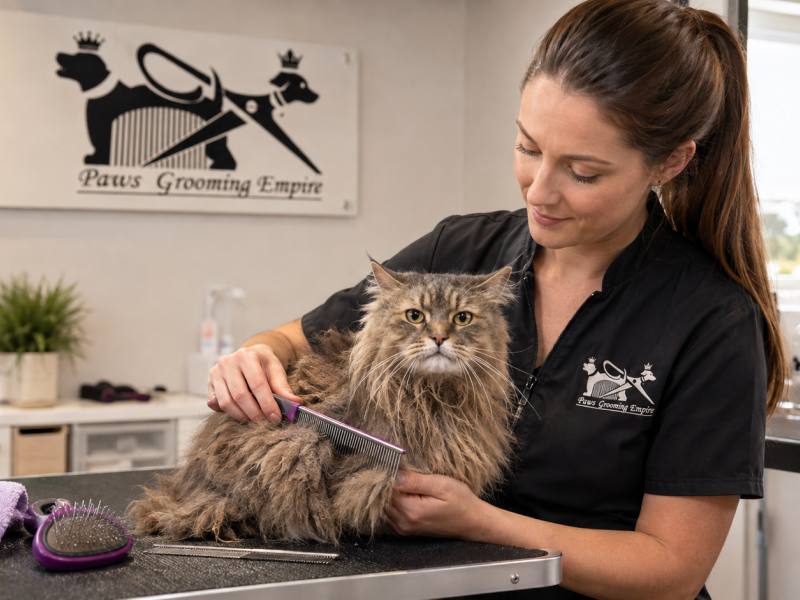
Small, manageable tangles may sometimes be worked through carefully using suitable grooming equipment.
More substantial matting may require a different approach to avoid repeatedly pulling at sensitive skin.
In very severe cases, or where there are concerns about the skin or your cat's health, veterinary assistance may be required. The RSPCA advises that difficult or extensive areas of matted fur may require help from an appropriately qualified groomer or veterinary professional.
The important point is: don't wait until matting becomes severe.
If you can feel knots forming beneath your cat's coat, arranging grooming early can make the process considerably easier.
Signs That Your Cat's Matting Needs Attention
Book a professional grooming assessment if you notice:
● Hard lumps of tangled hair
● Mats close to the skin
● Several areas becoming tangled
● Your cat licking or biting one particular area repeatedly
● Your cat becoming irritated when you touch their coat
● Fur clumping around the hindquarters
● Tangling underneath long fur that cannot easily be brushed
● Your usual brush no longer passing through the coat comfortably
If you notice wounds, sores, significant skin irritation, unexplained hair loss or a sudden change in your cat's grooming behaviour, speak to your vet.
Changes in grooming behaviour can sometimes indicate an underlying health issue rather than simply a coat-care problem. Cats Protection recommends contacting a vet where a cat suddenly starts grooming significantly more or less than normal.
How Paws Grooming Empire Can Help
Cat grooming is very different from dog grooming.
Cats require patient handling, an understanding of feline behaviour and an approach that avoids unnecessary restraint and stress.
At Paws Grooming Empire, our professional cat grooming service in North London is designed around a calm, cat-first approach. Our feline grooming expertise includes support with mat removal, coat maintenance and nail care.
Our aim is not simply to make your cat's coat look better.
We want to help make maintaining their coat easier and more comfortable.
We can help owners who are dealing with:
● Matted and tangled coats
● Long-haired cats requiring additional maintenance
● Excess loose coat
● Cats that are difficult to groom safely at home
● Older cats that struggle to groom themselves
● Nail trimming
● Routine professional coat maintenance
Following your cat's grooming appointment, we can also help you understand the level of maintenance their particular coat may need going forward.
Preventing Matted Fur Between Grooming Appointments
Prevention is much easier than dealing with severe matting.
1. Brush regularly
Short-haired cats may benefit from weekly brushing, while long-haired cats can require daily coat maintenance.
2. Check problem areas
Pay particular attention to areas where fur rubs together, including behind the ears, beneath the legs and around the hindquarters.
3. Deal with small knots quickly
Do not allow small tangles to develop into tight mats.
4. Don't force grooming
If your cat becomes distressed, aggressive or frightened, continuing to restrain them can make future grooming increasingly difficult.
5. Ask for professional help early
If you cannot comfortably remove a knot without pulling your cat's skin, stop and ask a professional groomer for advice.
Professional Cat Grooming in North London
If you have been searching for cat grooming in North London, cat mat removal or an experienced cat groomer near you, Paws Grooming Empire can help.
Our salon is located at:
Paws Grooming Empire
28 Aylmer Parade
London
N2 0PE
Our team understands that every cat is different. Some need occasional additional coat maintenance, while others require much more regular grooming support.
Instead of waiting until knots become difficult or uncomfortable, professional grooming can help keep your cat's coat manageable and make ongoing home maintenance easier.
Frequently Asked Questions About Cat Grooming
Does my cat need grooming?
Most cats groom themselves, but some need additional help. Long-haired cats, older cats, cats with mobility problems and cats prone to matting are particularly likely to benefit from additional grooming.
How often should I get my cat professionally groomed?
There is no fixed schedule for every cat. The right frequency depends on your cat's breed, coat length, age, lifestyle, tendency to mat and how effectively their coat can be maintained at home. Paws Grooming Empire can recommend an appropriate routine after assessing your cat's coat.
Can a groomer remove matted fur from my cat?
In many cases, yes. Professional groomers have suitable equipment and techniques for dealing with matting. The approach depends on how tight and extensive the mats are. Severe cases may require veterinary involvement.
Should I cut matted fur from my cat myself?
Avoid using scissors to cut tightly matted fur. Cat skin can become pulled into the mat, creating a risk of accidentally cutting the skin. Professional assistance is safer where mats cannot be gently brushed or combed out.
Is Your Cat's Coat Becoming Difficult to Manage?
Don't wait for a small knot to become a serious mat.
Whether your cat needs help with matted fur, coat maintenance, nail trimming or professional cat grooming, the team at Paws Grooming Empire can assess their individual needs and recommend an appropriate grooming approach.
Give your cat the professional coat care they need while making grooming easier for you at home.
Book your cat grooming appointment with Paws Grooming Empire in North London today.
Recent Articles