Matted Dog Hair: When Can It Be Brushed Out and When Must It Be Clipped?
21 July 2026
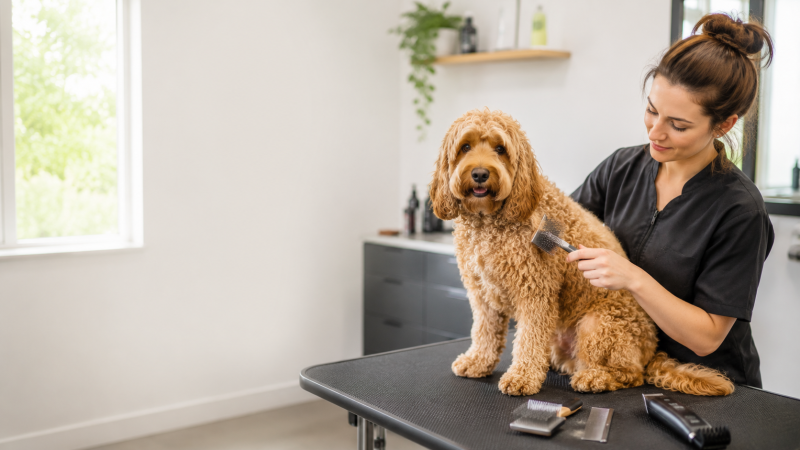
Can matted dog hair be brushed out? Learn when mats can be safely detangled, when clipping is necessary and why scissors should be avoided.
Discovering knots or matted hair in your dog’s coat can be worrying. You may wonder whether the tangles can be brushed out at home or whether your dog will need to be clipped.
The answer depends on how tight the matting is, how much of the body it covers and whether removing it would cause pain or distress.
Small, loose tangles may sometimes be brushed out carefully. However, mats that are dense, extensive or tight against the skin usually need to be removed with professional clippers.
Trying to preserve badly matted fur at all costs is rarely the kindest option. Your dog’s comfort, skin health and welfare must always take priority over the length or appearance of their coat.
At Paws Grooming Empire, our qualified groomers assess every pet individually before deciding whether the coat can be safely detangled or needs to be clipped.
What Is Matted Dog Hair?
Matted dog hair occurs when loose or tangled hairs twist together and form compact knots.
Without regular brushing, these tangles can collect more loose hair, moisture, dirt and debris. Over time, a small knot may develop into a hard, dense mat that pulls tightly on the skin.
Matting commonly develops in areas where there is frequent movement, moisture or friction, including:
● Behind the ears
● Under the collar or harness
● Beneath the front legs
● Around the armpits
● Between the back legs
● Around the tail
● Across the chest
● Along the stomach
● Around the paws
● Beneath the chin
● Around the sanitary area
Dogs with long, silky or curly coats often require frequent brushing because they are particularly vulnerable to tangling and matting.
Can Matted Dog Hair Be Brushed Out?
Some matted dog hair can be brushed out, but only when the tangles are small, loose and reasonably easy to separate.
A mat may be suitable for gentle detangling when:
● It affects only a small area
● It sits mainly on the surface of the coat
● You can separate parts of it with your fingers
● You can place a comb between the mat and the skin
● The surrounding skin looks healthy
● Your dog remains relaxed while the area is handled
● Removing it will not require prolonged pulling or repeated brushing
Even a small mat should be approached carefully. Brushing too forcefully can pull on the skin and make grooming painful.
Professional groomers consider not only whether a mat can technically be removed, but whether doing so is fair and comfortable for the dog.
When Should Matted Hair Be Clipped?
Matted hair should usually be clipped when brushing it out would cause pain, excessive stress or skin damage.
The mat is tight against the skin
When a mat sits directly against the skin, it may be impossible to place a comb beneath it safely.
These mats pull continuously on the skin as the dog walks, sits or moves. Attempting to brush them out can increase that pressure and cause significant discomfort.
The mat is hard or felted
Felted matting feels thick, dense and compact. It may resemble a pad of felt rather than a normal tangle.
At this stage, individual hairs can no longer be separated easily. Repeated brushing is unlikely to solve the problem without causing unnecessary pain.
Large areas of the body are affected
Extensive matting is sometimes described as a pelted coat because the compacted fur forms a tight layer around the dog’s body.
Trying to demat an entire pelted coat may take hours. This can expose the dog to prolonged pulling, repeated handling and considerable stress.
In these circumstances, clipping is usually the most humane solution.
Your dog shows signs of pain or distress
Stop trying to brush the coat when your dog:
● Cries, yelps or whines
● Pulls away repeatedly
● Tries to bite or snap
● Licks their lips excessively
● Pants heavily without being hot
● Shakes or trembles
● Guards the affected area
● Becomes unusually restless or withdrawn
Animal welfare guidance recommends stopping grooming when a pet becomes worried or stressed rather than forcing them to continue.
The skin beneath the mat may be damaged
Severe matting can hide redness, sores, parasites, moisture, infections and other skin problems.
Dense mats may reduce ventilation around the skin and hold dampness and dirt close to the body. Veterinary grooming guidance notes that matting can contribute to redness, dry skin and severe irritation if left untreated.
Clipping allows the groomer or vet to see the affected skin and determine whether medical treatment is needed.
Is Matted Hair Painful for a Dog?
Yes, matted hair can be painful.
A tight mat pulls on the skin whenever your dog moves. The larger and tighter it becomes, the greater the pressure on the underlying skin.
Severe matting may:
● Pull and pinch the skin
● Restrict normal movement
● Make sitting or lying down uncomfortable
● Trap moisture and dirt
● Conceal wounds or inflammation
● Make toileting difficult
● Create pressure around sensitive areas
● Prevent the coat from functioning normally
● Make future grooming frightening or stressful
Matting may be especially uncomfortable around the ears, armpits, paws, groin and tail because these areas move frequently and can be sensitive.
Regular detangling helps prevent the painful pulling associated with compacted coats.
The Comb Test: A Useful Initial Check
One simple way to assess a mat is to see whether a grooming comb can pass beneath or through it without touching the skin.
If the comb moves through the coat easily, the knot may be loose enough for careful detangling.
If you cannot distinguish the mat from the skin or cannot place a comb beneath it, do not force the brush through.
The comb test is only an initial guide. It does not replace a professional coat assessment, particularly when the mat is close to the ears, eyes, groin, paws or other sensitive areas.
How to Brush Out a Small, Loose Mat Safely
Only attempt home detangling when the knot is small, loose and not causing your dog discomfort.
1. Choose a calm environment
Ask your dog to settle somewhere quiet with good lighting. Use praise and treats to help keep the experience positive.
Do not restrain or force a distressed dog to remain still.
2. Use a dog-safe detangling product
A pet-safe detangling or conditioning spray can help lubricate the hairs and reduce friction.
Do not use household chemicals or human hair products unless a vet has confirmed that they are safe for your dog.
3. Separate the mat with your fingers
Gently divide the tangle into smaller sections where possible.
Avoid pulling the entire knot away from the body.
4. Support the hair close to the skin
Hold the fur gently at the base of the mat. This reduces the amount of pulling transferred directly to your dog’s skin.
5. Work from the ends towards the base
Begin at the outer edge of the knot using short, gentle strokes.
Do not start at the skin and drag the brush through the full length of the mat. Similar detangling guidance recommends working away from the root to reduce pulling on the skin.
6. Use a light touch
A slicker brush may help loosen small mats in medium, long or curly coats, but it should be used gently. Pressing too hard can cause discomfort or scratch the skin.
7. Check with a metal comb
Once the area looks smooth, pass a suitable grooming comb through the coat.
A coat may look brushed on the surface while knots remain closer to the skin. The comb helps confirm whether the tangle has been removed properly.
8. Stop before your dog becomes distressed
A small knot is not worth turning grooming into a painful or frightening experience.
When the mat is not loosening quickly or your dog becomes uncomfortable, stop and contact a professional groomer.
What Is Line Brushing?
Line brushing is a grooming technique used to work through a coat in small, controlled sections.
Rather than brushing only across the surface, the coat is gently parted to reveal a narrow line of hair. Each section is then brushed from the ends towards the roots before moving to the next section.
When carried out correctly, line brushing can:
● Reach loose hair beneath the surface
● Prevent hidden knots from developing
● Help maintain long or curly coats
● Improve airflow through the coat
● Make it easier to check the skin
● Reduce future matting
Line brushing should remain gentle. It is a coat-maintenance method, not a suitable way to force through hard or pelted matting.
Never Cut Tight Mats with Scissors
Do not attempt to cut a tight mat away from your dog’s skin using ordinary scissors.
A dog’s skin can be drawn upwards into the mat, making it extremely difficult to see where the coat ends and the skin begins.
Even when scissors appear to be positioned safely, your dog may move suddenly. This creates a serious risk of cutting or puncturing the skin.
Veterinary guidance warns against reaching for scissors when a comb cannot be placed between the obstruction and the skin. Clippers are generally safer, but close mat removal should still be left to an experienced professional.
Particular caution is needed around:
● The ears
● The eyes
● The mouth
● The armpits
● The groin
● The paws
● The tail
● Skin folds
Do not pull or cut mats attached closely to an ear. Ear skin is thin, delicate and may be difficult to distinguish from compacted fur.
Why Professional Clippers Are Safer Than Scissors
Professional groomers use clippers designed to pass beneath matted fur while controlling the blade carefully against the body.
However, removing a severely matted coat is still skilled and delicate work.
Tightly matted hair may pull the skin into unusual positions. The skin beneath it can also be inflamed, fragile or sensitive. This increases the difficulty of clipping and makes a professional assessment essential.
The aim is not to achieve the shortest or quickest haircut. The aim is to remove the matting with the least possible discomfort and risk.
Why Can a Dog Look Different After Mat Removal?
Owners are sometimes surprised by how short their dog’s coat appears after severe matting has been removed.
This is usually because the clipper blade must pass beneath the mat. When the compacted fur sits close to the skin, there may be very little healthy coat available underneath it.
The groomer cannot safely leave hair that is trapped inside the mat.
The final coat length is therefore determined by:
● How close the matting sits to the skin
● The density of the compacted hair
● The condition of the skin
● The dog’s tolerance for grooming
● Which blade can pass beneath the mat safely
Clipping a heavily matted coat is not a styling preference. It is often a welfare-led decision.
What May Be Found Beneath a Matted Coat?
Once the coat has been removed, the skin may reveal problems that were previously hidden.
These can include:
● Redness
● Bruising
● Flaky or dry skin
● Moist skin
● Hot spots
● Scabs
● Small wounds
● Fleas or ticks
● Rashes
● Inflammation
● Unusual lumps
● Areas where the dog has been chewing or scratching
Regular grooming gives owners and professionals an opportunity to notice skin irritation, lumps and other changes earlier.
A groomer cannot diagnose a medical condition. When the skin appears sore, infected, swollen or badly damaged, veterinary advice may be necessary.
Should You Bathe a Matted Dog Before Brushing?
A heavily matted dog should not normally be bathed at home before the coat has been assessed.
Water can cause tangled hair to tighten as it dries, making the matting denser and more difficult to remove. Grooming guidance specifically warns that bathing a dog with existing mats can make them tighter and harder to brush out.
The coat may also retain moisture close to the skin, particularly when it is thick or pelted.
A professional groomer can determine whether the dog should be clipped before bathing or whether a limited amount of detangling is suitable first.
Which Dogs Are Most Likely to Develop Mats?
Any dog can develop tangles, but matting is particularly common in dogs with:
● Curly coats
● Long coats
● Silky coats
● Woolly coats
● Dense undercoats
● Feathering around the legs and ears
● Coats that are frequently wet
● Harnesses or clothing worn regularly
Breeds and coat types commonly affected include:
● Cockapoos
● Cavapoos
● Labradoodles
● Goldendoodles
● Poodles
● Bichon Frisés
● Shih Tzus
● Maltese
● Lhasa Apsos
● Cocker Spaniels
● Cavalier King Charles Spaniels
● Old English Sheepdogs
● Pomeranians
● Long-haired mixed breeds
A dog’s individual coat matters more than the breed name alone. Two dogs of the same crossbreed may have very different textures and grooming needs.
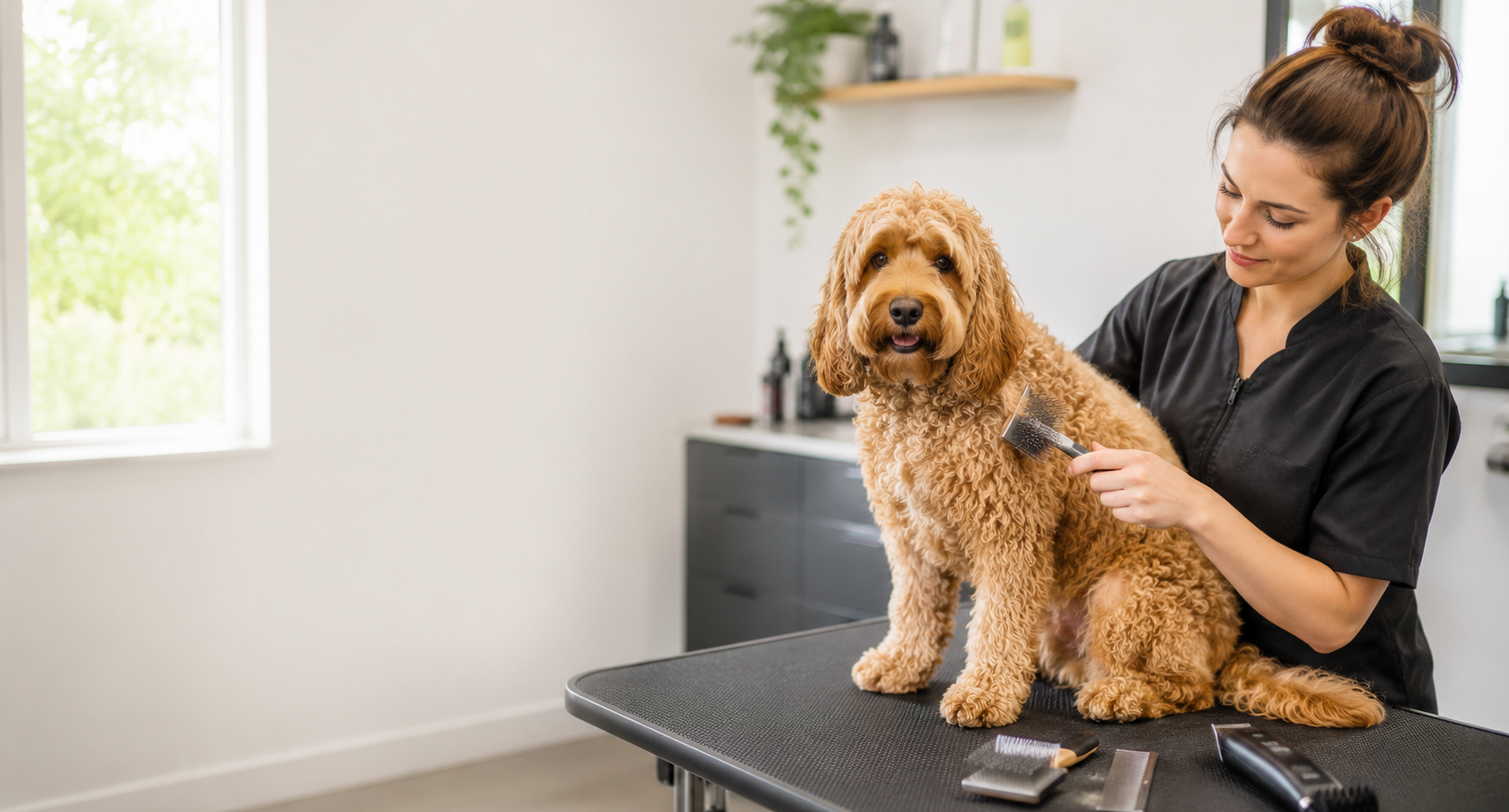
Why Doodle-Type Coats Can Mat Quickly
Poodle crosses may inherit a combination of curly, woolly, straight or shedding hairs.
Loose hair can remain trapped within the coat instead of falling away naturally. When the coat is not brushed and combed thoroughly, these hairs may twist around the growing coat and form dense matting close to the skin.
A fluffy surface does not always mean the coat is free from knots. Owners need to check beneath the visible outer layer with an appropriate comb.
How to Prevent Matted Dog Hair
Preventing matting is far more comfortable than removing it.
Brush regularly
The correct frequency depends on the coat.
Long, silky and curly coats may require daily attention, while other dogs may need brushing several times a week.
Use the right tools
Different coats require different brushes and combs.
A typical home grooming kit may include:
● A slicker brush
● A pin brush
● A suitable metal comb
● A dog-safe detangling spray
Ask a qualified groomer which tools are appropriate for your dog rather than purchasing an aggressive dematting tool without guidance.
Comb after brushing
Brushing can smooth the top layer while leaving knots beneath it.
A metal comb should pass comfortably from the ends of the hair towards the skin. Pay particular attention to high-friction areas.
Remove collars and harnesses during grooming
Check beneath your dog’s collar, harness and clothing regularly.
Friction can encourage tangles to form, especially when the coat is damp.
Dry the coat thoroughly
After walks, bathing or swimming, gently dry and brush the coat.
Leaving a long or curly coat damp may encourage tangles to tighten.
Keep regular grooming appointments
A consistent professional grooming schedule helps prevent the coat from reaching the stage where extensive clipping is necessary.
The ideal interval depends on the breed, coat length, lifestyle and home-care routine.
What Happens During a Professional Matting Assessment?
At the beginning of the appointment, a groomer may examine:
● Where the matting is located
● How much of the body is affected
● How close the mats are to the skin
● Whether the skin appears sore
● Whether a comb can pass through the coat
● Your dog’s age and health
● Your dog’s behaviour and tolerance
● Whether detangling would be fair and comfortable
The groomer should explain what can realistically be saved and what needs to be clipped.
It may not be possible to confirm the exact finished coat length until the groomer begins working beneath the matting.
Why Dematting Is Not Always the Best Choice
Owners may understandably wish to preserve their dog’s long coat, especially before a holiday, celebration or family photograph.
However, extensive dematting may involve repeated pulling across already sensitive skin.
A longer coat is not a successful result when achieving it causes unnecessary pain.
A welfare-first groomer will choose clipping when it is kinder than prolonged brushing. The coat will grow again, while a negative grooming experience can affect a dog’s confidence for much longer.
Professional Matted-Coat Grooming at Paws Grooming Empire
Paws Grooming Empire provides professional dog and cat grooming from our salon between Hampstead and East Finchley.
Our fully qualified groomers are trained in animal welfare and assess every coat individually. We consider the pet’s comfort, coat condition, age, health and temperament before recommending detangling, trimming or clipping.
Our salon is also a fully licensed day care facility approved by the council. We use modern, 5-star rated grooming equipment chosen to support safe, comfortable and professional care.
When your dog has developed matting, our team will explain:
● Whether the tangles can be brushed out safely
● Which areas may need clipping
● The likely finished coat length
● Any skin concerns discovered beneath the coat
● How to prevent the matting from returning
● Which brushes and combs to use at home
● How often to arrange future grooming appointments
Our priority is not simply how your dog looks when leaving the salon. It is how safely and comfortably they experience the grooming process.
When Should You Contact a Vet?
Contact your veterinary practice when:
● The skin beneath the coat is bleeding
● There is a strong or unusual smell
● You can see pus, discharge or an open wound
● Your dog appears unwell
● The area is swollen or extremely painful
● Your dog is constantly scratching or biting
● Parasites are present
● A mat is interfering with toileting
● The coat is restricting circulation or movement
● Your elderly or unwell dog cannot tolerate normal grooming
A groomer can identify visible concerns, but only a veterinary professional can diagnose and treat medical conditions.
The Final Answer: Brush or Clip?
Small, loose and superficial tangles may be brushed out carefully using suitable grooming products, gentle tools and short strokes.
Mats should usually be clipped when they are hard, extensive, painful or tight against the skin.
Never attempt to cut close matting with scissors. It is easy to mistake stretched or folded skin for part of the mat and cause a serious injury.
When you are uncertain, stop brushing and arrange a professional coat assessment.
Choosing to clip a badly matted coat is not giving up on your dog’s appearance. It is often the safest and kindest way to relieve discomfort and give the coat a healthy fresh start.
Book a Matted-Coat Assessment
Has your dog developed knots, tangles or larger areas of matting?
Contact Paws Grooming Empire to arrange a professional grooming assessment near Hampstead and East Finchley.
Our qualified team will examine the coat, explain the safest options and recommend a grooming plan focused on your pet’s welfare and long-term coat health.
Frequently Ask Questions
Can matted dog hair be brushed out?
Small, loose mats may sometimes be brushed out. Hard, extensive or skin-tight mats generally need professional clipping to avoid unnecessary pain and skin damage.
Is matted fur painful for dogs?
Yes. Tight mats pull continuously on the skin and may become more painful when the dog moves. Severe matting can also restrict movement and conceal irritated or damaged skin.
Can I cut a mat out with scissors?
No. Tight mats can pull skin inside or immediately beneath the knot. A small movement can cause scissors to cut the skin. Contact a professional groomer instead.
What does a pelted coat mean?
A pelted coat is an extensively matted coat where large areas of fur have compacted into a tight, connected layer close to the skin.
Will my dog need to be shaved completely?
Not always. The groomer will assess each area separately. Some parts may be brushable while others require clipping. With severe all-over matting, a short full-body clip may be the safest solution.
Why can’t the groomer leave the coat longer?
The clipper must pass underneath the mat. When the mat sits directly against the skin, there may be no safe layer of unmatted hair beneath it to preserve.
Should I wash my dog before a matting appointment?
Usually not. Water may tighten existing mats and hold moisture against the skin. Leave the coat dry unless your groomer or vet advises otherwise.
How quickly can dog hair become matted?
Some curly, woolly or fine coats can begin tangling within days, especially around the ears, legs, harness areas and armpits.
How often should I brush my dog?
This depends on the coat. Long, curly and silky coats may need daily brushing and combing. Your groomer can recommend a routine suited to your dog.
How often should a matted dog be professionally groomed after clipping?
Many high-maintenance coats benefit from appointments approximately every four to eight weeks, but the correct interval depends on the coat, chosen length and home-brushing routine.