Should You Shave a Double-Coated Dog? What Owners Need to Know
21 July 2026
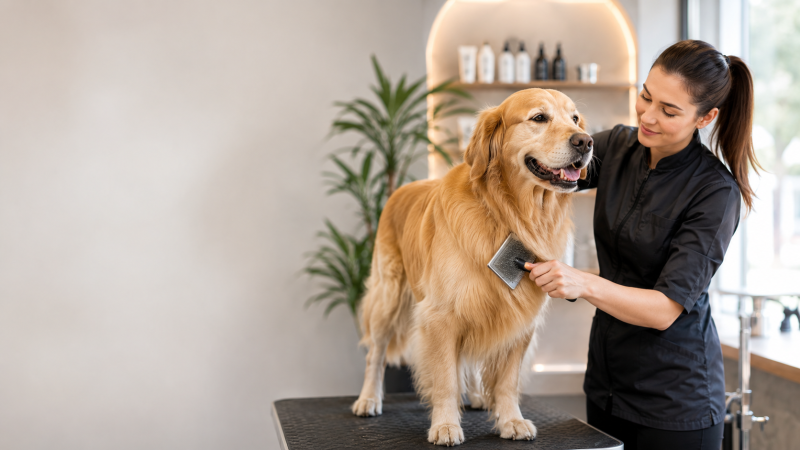
Should you shave a double-coated dog? Learn about coat damage, safe trimming, de-shedding and professional grooming from Paws Grooming Empire.
When warmer weather arrives, many dog owners naturally wonder whether shaving their pet will help them stay cool. After all, wearing a thick coat during summer sounds uncomfortable.
However, dogs regulate their body temperature differently from humans. For most double-coated breeds, shaving the coat can do more harm than good.
A double coat provides natural insulation and protection throughout the year. Removing it may expose your dog’s skin, interfere with healthy coat growth and make temperature regulation more difficult.
At Paws Grooming Empire, we believe every grooming decision should be based on your pet’s breed, coat condition, health and individual welfare. Here is what owners need to know before considering shaving a double-coated dog.
What Is a Double-Coated Dog?
A double-coated dog has two separate layers of fur, each performing an important role.
The undercoat
The undercoat is the soft, dense and fluffy layer closest to the skin. It traps air and provides insulation, helping to keep your dog warm during colder weather.
It also helps protect your dog from excessive heat during warmer months. As temperatures rise, double-coated breeds naturally shed some of this undercoat to create better airflow.
The guard hairs
The longer outer layer is often referred to as the topcoat or guard hairs.
These stronger hairs help to:
● Repel dirt and moisture
● Protect the skin from sunlight
● Reduce exposure to insect bites
● Shield the softer undercoat
● Maintain the coat’s natural texture and appearance
Together, the undercoat and guard hairs form a protective system designed to work throughout the seasons.
Which Dog Breeds Have Double Coats?
Many popular breeds have double coats, although coat thickness and grooming requirements vary.
Common double-coated breeds include:
● Siberian Huskies
● Alaskan Malamutes
● Golden Retrievers
● Labrador Retrievers
● German Shepherds
● Pomeranians
● Border Collies
● Samoyeds
● Bernese Mountain Dogs
● Akitas
● Chow Chows
● Shetland Sheepdogs
Some mixed-breed dogs also inherit a double coat. When you are unsure about your dog’s coat type, a qualified groomer can examine its texture, density and growth pattern before recommending a suitable grooming plan.
Should You Shave a Double-Coated Dog?
In most circumstances, no. A healthy double-coated dog should not be shaved simply to reduce shedding or keep them cooler during summer.
Shaving removes both the protective guard hairs and the insulating undercoat. This disrupts the natural system that helps protect your dog from heat, cold, moisture and sunlight.
Professional guidance also warns that shaving a double coat may cause long-term changes to its texture, colour and growth pattern.
Why Shaving Does Not Necessarily Keep Dogs Cooler
It is understandable to apply human logic and assume that less hair means a cooler body.
However, a dog’s double coat does not behave like a person wearing a heavy jumper. The coat traps a layer of air around the body, helping to insulate the dog against both cold and external heat.
When the coat is properly maintained and loose undercoat is removed, air can move more effectively through the fur.
Dogs also cool themselves mainly by panting and, to a lesser extent, through their paw pads. Removing their coat does not replace these natural cooling mechanisms.
A neglected, heavily impacted coat can trap heat and restrict airflow. The safer response is usually professional de-shedding and coat maintenance rather than shaving the dog down.
What Can Happen After a Double Coat Is Shaved?
Shaving a double-coated dog may lead to several problems.
Uneven or delayed regrowth
The soft undercoat often grows more quickly than the protective guard hairs. It may become dominant before the topcoat has had time to recover.
This can leave the coat looking patchy, fluffy or uneven. In some dogs, full regrowth may take many months. Veterinary guidance notes that delayed hair regrowth can occasionally continue for up to two years.
Changes to coat texture
A previously smooth and weather-resistant coat may grow back woolly, dull or more prone to tangling.
This type of altered regrowth is sometimes informally called “coat funk”. The coat may become harder to maintain because the dense undercoat crowds out or obscures the slower-growing guard hairs.
Increased risk of sunburn
Your dog’s skin may not be accustomed to direct sunlight. Removing the protective topcoat can leave exposed areas vulnerable to UV damage and sunburn.
Reduced protection from insects and debris
Guard hairs provide a physical barrier against insects, dirt, twigs and environmental irritants. Shaving reduces this natural protection.
It does not stop shedding
Shaving does not prevent the natural shedding cycle. The dog will still shed, but the loose hairs will be shorter and may be more difficult to notice or remove from fabrics.
Can Shaving Cause Permanent Coat Damage?
There is no guarantee that a shaved double coat will grow back exactly as it was.
Some dogs experience normal regrowth, while others develop changes in colour, thickness or texture. Certain plush-coated breeds, including Huskies and Pomeranians, may be particularly susceptible to delayed regrowth following clipping.
Age, hormonal health, nutrition, medical conditions and the dog’s individual hair-growth cycle can all influence recovery.
This is why shaving should never be treated as a routine cosmetic decision.
When Might a Double-Coated Dog Need to Be Shaved?
There are limited circumstances where clipping or shaving may be necessary.
Severe matting
If the coat has become tightly matted against the skin, brushing it out may cause significant pain, stress or skin damage.
In severe cases, carefully clipping beneath the matting may be the most humane option. The dog’s comfort and welfare must take priority over preserving the coat.
Veterinary treatment or surgery
A vet may need to shave a specific area to perform surgery, examine the skin, place medical equipment or treat an infection.
This is a clinical decision rather than a cosmetic grooming choice.
Age, illness or reduced mobility
An elderly or unwell dog may no longer tolerate lengthy brushing or regular coat maintenance.
Where thorough grooming would cause excessive discomfort or distress, a shorter, manageable coat may sometimes be recommended after considering the dog’s health and welfare.
Serious skin or parasite problems
Clipping may occasionally make it easier for a vet to examine or treat affected skin. It can also help expose severe flea or tick infestations.
However, owners should seek veterinary advice rather than shaving the dog at home.
Is It Safe to Trim a Double-Coated Dog?
Yes, careful trimming is usually possible. The key distinction is between neatening the coat and shaving it close to the skin.
A qualified groomer may recommend:
● Tidying excess fur around the paw pads
● Shaping feathering around the legs
● Neatening the outline of the coat
● Trimming the sanitary area
● Removing damaged or excessively tangled ends
● Tidying fur around the ears where appropriate
The natural body coat should generally remain intact.
The correct approach depends on the breed. Some double-coated dogs need only brushing and de-shedding, while others may benefit from light outline trimming.
What Should You Do Instead of Shaving?
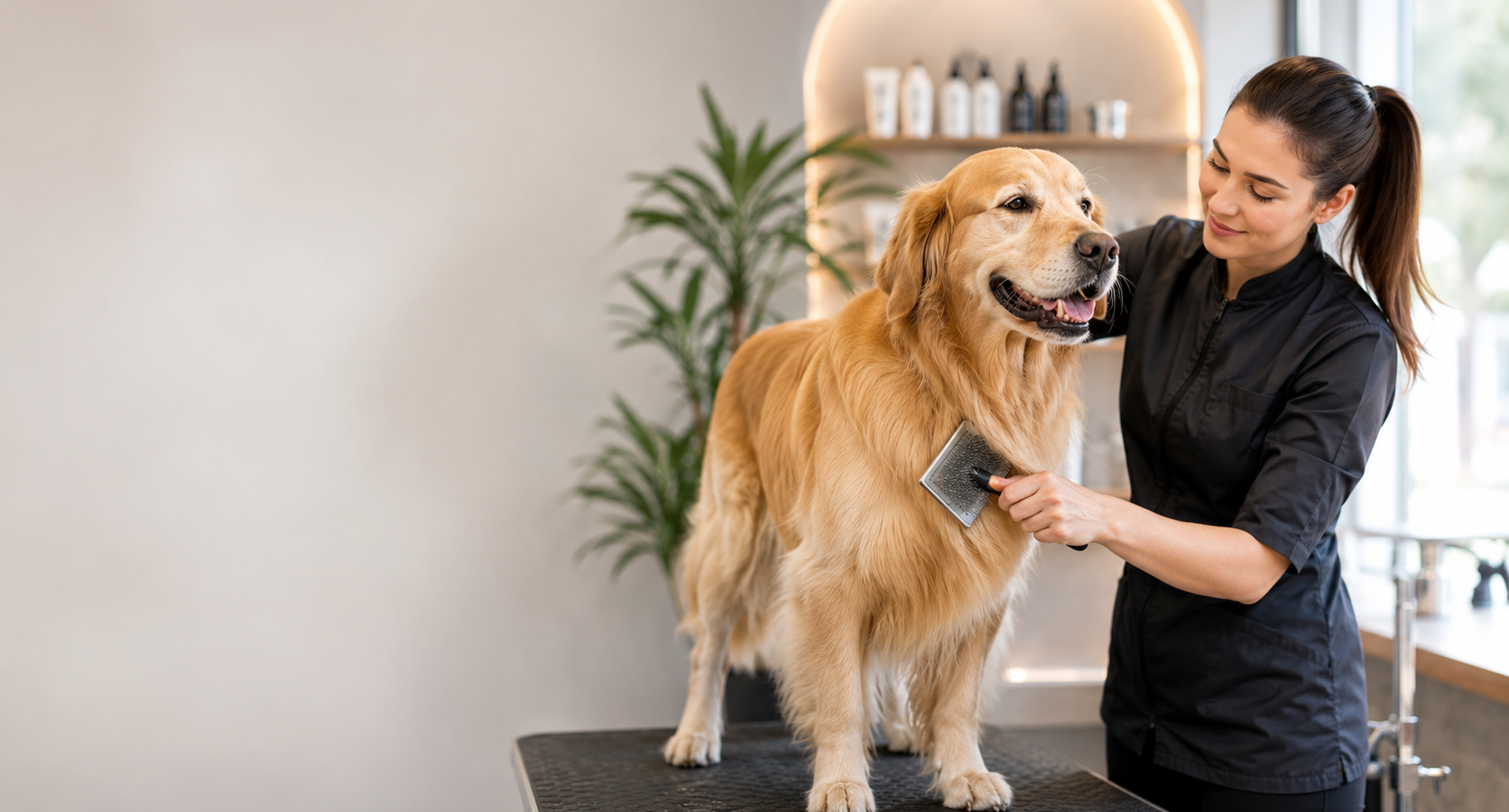
For most double-coated dogs, the best option is a regular professional grooming routine.
Regular brushing
Brushing removes loose undercoat before it becomes compacted or matted.
The frequency will depend on your dog’s breed, coat density and shedding pattern. Some dogs may need brushing several times a week, particularly during seasonal shedding.
Professional de-shedding
A professional de-shedding treatment helps remove loose and impacted undercoat without cutting away the protective topcoat.
This can:
● Improve airflow through the coat
● Reduce loose hair around the home
● Help prevent matting
● Support healthy skin
● Make the dog feel cleaner and more comfortable
Professional grooming standards recommend techniques such as carding and undercoat raking for double-coated dogs rather than routinely shaving the coat.
Bathing and thorough drying
Bathing can loosen dead undercoat, dirt and debris. However, a dense double coat must be rinsed and dried thoroughly.
Moisture trapped close to the skin can contribute to irritation, odour and matting. Professional drying equipment helps separate the coat and remove loose undercoat safely.
Coat and skin checks
Regular grooming also provides an opportunity to identify:
● Lumps or unusual swelling
● Skin irritation
● Fleas or ticks
● Sore areas
● Hot spots
● Changes in coat condition
● Overgrown nails
Groomers cannot diagnose medical conditions, but they can alert owners when something appears unusual and recommend contacting a vet.
How Often Should You Bathe a Double-Coated Dog?
Many double-coated dogs may benefit from bathing approximately every six to twelve weeks, but there is no single timetable suitable for every pet.
The correct frequency depends on:
● Breed and coat type
● Activity level
● Seasonal shedding
● Skin condition
● Time spent outdoors
● Exposure to mud, water or dirt
● Veterinary advice
Overbathing with unsuitable products can strip natural oils from the coat and irritate the skin. Waiting too long between grooming appointments can allow the undercoat to become compacted.
A professional groomer can recommend a schedule based on your dog’s individual needs.
How Often Should a Double-Coated Dog Be Professionally Groomed?
As a general guide, many double-coated breeds benefit from professional grooming every six to twelve weeks.
Dogs experiencing a heavy seasonal shed may need more frequent appointments. Regular maintenance is normally easier and more comfortable than trying to correct months of undercoat build-up in one session.
Professional grooming is particularly useful when:
● The coat feels unusually dense
● Brushing no longer reaches the skin
● Large amounts of undercoat are being shed
● Knots repeatedly form behind the ears or legs
● The coat remains damp for a long time
● Your dog becomes uncomfortable during home grooming
Can You Shave a Double-Coated Dog at Home?
Shaving a double-coated dog at home is not recommended.
Dense coats can make it difficult to see where the skin begins. Clippers may catch loose or folded skin, causing cuts, clipper irritation or burns.
Attempting to force clippers through matting can also pull painfully on the skin.
A qualified groomer has the training, equipment and handling experience needed to assess whether the coat can be brushed, de-shed, trimmed or, in exceptional circumstances, clipped for welfare reasons.
Professional Double-Coat Grooming at Paws Grooming Empire
Every double-coated dog deserves grooming that respects the natural structure of their coat.
At Paws Grooming Empire, our salon is located between Hampstead and East Finchley. We provide professional grooming services for dogs and cats in a calm, carefully managed environment.
Our team consists of fully qualified groomers trained in animal welfare. We assess each pet individually, considering their breed, coat condition, age, temperament and comfort before beginning any grooming service.
Our salon is also a fully licensed day care facility approved by the council. We use modern, 5-star rated grooming equipment selected to support safety, comfort and high-quality results.
Whether your dog needs a thorough de-shedding treatment, a bath and blow-dry, careful trimming or ongoing coat maintenance, our priority is always your pet’s wellbeing.
The Final Answer: Should You Shave a Double-Coated Dog?
A double-coated dog should not normally be shaved for convenience, appearance or warm weather.
Their undercoat and guard hairs work together to provide insulation and protection. Shaving may increase exposure to sunlight and insects, interfere with natural coat growth and result in uneven or delayed regrowth.
Regular brushing, professional de-shedding, appropriate bathing and careful trimming are usually safer alternatives.
There are exceptions, including severe matting, medical treatment or situations where an elderly or unwell dog cannot comfortably tolerate normal grooming. These decisions should be made with your dog’s welfare at the centre, ideally with guidance from a qualified groomer or veterinary professional.
Book a Double-Coat Grooming Appointment
Unsure whether your dog needs de-shedding, trimming or a complete grooming appointment?
Speak to the qualified team at Paws Grooming Empire. We will assess your dog’s coat and recommend a grooming approach suited to their breed, condition and individual needs.
Contact Paws Grooming Empire today to arrange a professional grooming appointment near Hampstead and East Finchley.
Frequently Asked Questions
Does shaving a double-coated dog stop shedding?
No. Shaving shortens the hairs but does not stop the natural shedding cycle. Professional brushing and de-shedding are more effective ways to manage loose undercoat.
Will my double-coated dog overheat in summer?
Any dog can overheat in warm weather. A clean, well-maintained double coat helps provide insulation, but owners must still offer shade, fresh water and a cool environment. Avoid strenuous exercise during the hottest part of the day.
Can a double coat grow back after shaving?
It often grows back, but the process can take months and the texture may change. Some dogs experience patchy, woolly or delayed regrowth.
Can a groomer trim my double-coated dog?
Yes. A groomer can usually tidy areas such as the paws, feathering and sanitary region without shaving the main body coat.
What is a professional de-shedding treatment?
De-shedding involves using appropriate bathing, drying, brushing and undercoat-removal techniques to release dead fur while preserving the protective topcoat.
How do I know whether my dog has a double coat?
Double-coated dogs usually have a soft, dense layer close to the skin and longer, firmer guard hairs above it. A qualified groomer can assess your dog’s coat when you are unsure.
What should I do if my dog’s coat is severely matted?
Do not pull, cut or force a brush through tight matting at home. Contact a professional groomer for an assessment. Veterinary involvement may be required if the skin is sore, infected or damaged.